
YouTube titles play a major role in YouTube titles SEO. A well-written title helps your video appear in search results and encourages viewers to click. In 2026, with more competition and smarter algorithms, creating effective titles is essential for beginners who want to grow their channels.
What Is YouTube Titles SEO and How It Works
YouTube titles SEO refers to optimizing your video titles so they perform well in YouTube’s search engine and recommendation system. YouTube works like a search engine. It uses titles to understand what your video is about and to decide which videos to show users.
The algorithm looks at two main things related to titles:
- Relevance: Does the title match what people are searching for? Including the right keywords helps YouTube connect your video to search queries.
- Click-through rate (CTR): How many people who see your title actually click it? A title that sparks interest leads to more clicks, which signals to YouTube that your video is valuable. Higher CTR and better watch time can improve your video’s ranking over time.
Titles appear in search results, on the home feed, and in suggested videos. On mobile devices, only the first 35-50 characters may show fully, so the beginning of your title matters most. A good title balances keyword optimization with human appeal to boost both discoverability and clicks.
In short, YouTube titles SEO combines search-friendly keywords with clickable elements that match viewer intent and deliver on the promise once they start watching.
Important Fundamentals Beginners Must Understand
Before writing titles, grasp these core ideas:
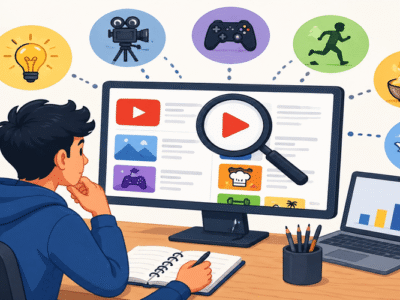
- Keyword Research First: Your title should include words or phrases that people actually type into YouTube search. Without relevant keywords, even the most creative title may not get discovered.
- Title Length Matters: Aim for 50-60 characters. This keeps the full title visible on most devices without truncation. YouTube allows up to 100 characters, but longer titles risk hiding key information.
- Front-Loading Keywords: Place your main keyword near the beginning, ideally within the first 30 characters. This helps with both SEO and visibility.
- Clarity Over Cleverness: The title must clearly tell viewers what the video offers. Vague or overly mysterious titles can confuse people and hurt performance.
- Match Title to Content and Thumbnail: The title, thumbnail, and video content must align. Misleading titles damage audience retention and long-term rankings.
- Viewer Psychology: People click titles that promise quick value, solve a problem, spark curiosity, or offer specific results (like numbers or timeframes).
Understand that YouTube titles SEO is not just about stuffing keywords. It is about creating titles that both the algorithm and real viewers like.
Step-by-Step Guide to Get Started with YouTube Titles SEO
Follow this simple process to create better titles:
Step 1: Research Your Keyword Identify the primary keyword for your video. Use tools (listed later) to find search volume and competition. For example, if your video teaches photo editing, a good primary keyword might be “how to edit photos in Lightroom.”
Step 2: Understand Search Intent Ask: What is the viewer hoping to achieve? Are they looking for a tutorial, review, list of tips, or quick hack? Tailor the title to that intent.
Step 3: Build the Base Title Start with the main keyword at the front. Example base: “How to Edit Photos in Lightroom”
Step 4: Add Clickable Elements Incorporate power words, numbers, years, or benefits. Make it specific and benefit-driven.
Step 5: Check Length and Readability Count characters. Ensure it reads naturally. Read it aloud to test if it sounds clear.
Step 6: Test Variations Create 3-5 title options. Choose the one that best balances SEO and appeal. For new videos, pick one and monitor performance in YouTube Analytics later.
Step 7: Upload and Monitor After uploading, check impressions and CTR in YouTube Studio. Adjust future titles based on what works.
Repeat this process for every video to build strong YouTube titles SEO habits.
Best Practices and Strategies for Clickable Titles YouTube
Use these proven strategies to improve your clickable titles YouTube:
- Use Power Words Sparingly: Words like “Easy,” “Proven,” “Ultimate,” “Complete,” or “2026” can increase interest without overdoing it.
- Include Numbers: Lists and specific numbers perform well because they promise structured, digestible content. Example: “7 Easy Ways to…”
- Add Timeframes or Results: “In 10 Minutes” or “Grow Your Channel by 2026” sets clear expectations.
- Create Curiosity Ethically: Tease without misleading. Instead of “You Won’t Believe This,” try “This One Setting Changed My Editing Forever.”
- Target Specific Audiences: Mention “For Beginners” or “For Small Channels” to attract the right viewers.
- Use Brackets or Parentheses: These stand out, like “[Updated 2026]” or “(No Expensive Software).”
- Keep It Natural: Avoid keyword stuffing. The title should read like normal English.
Title Formulas That Work Well:
- How to [Achieve Result] in [Time] – “How to Grow YouTube Subscribers in 30 Days”
- [Number] Best [Topic] for [Audience] – “10 Best Title Ideas for Beginners in 2026”
- Why [Common Problem] Happens + Solution – “Why Your Videos Get No Views and How to Fix It”
- [Main Keyword] [Benefit] [Year] – “YouTube Titles SEO Tips That Get More Clicks in 2026”
Combine keywords with value to create clickable titles YouTube that also support SEO.
Common Mistakes Beginners Make
Many new creators struggle with titles. Avoid these errors:
- Ignoring Keywords: Using only creative phrases that no one searches for.
- Making Titles Too Long: Over 60 characters that get cut off on mobile.
- Clickbait That Doesn’t Deliver: Promising something the video does not provide, which hurts watch time and future recommendations.
- Being Too Vague: Titles like “My New Video” or “Fun Tips” give no clear reason to click.
- Overusing Capital Letters: ALL CAPS or excessive emphasis looks spammy.
- Forgetting Mobile Users: Not testing how the title appears when truncated.
- Not Matching Thumbnail: The title and image must support each other.
Fixing these mistakes can quickly improve your CTR and YouTube titles SEO results.
Practical Examples and Real Use Cases
Here are before-and-after examples for different video types:
Tutorial Video Before: “Editing Photos” After: “How to Edit Photos in Lightroom for Beginners 2026”
List Video Before: “Best Tools for YouTube” After: “7 Free Tools for Better YouTube Titles SEO and Growth”
Problem-Solution Video Before: “Channel Not Growing” After: “Why Your YouTube Channel Is Not Growing and How to Fix It”
Review Video Before: “New Camera Review” After: “Sony ZV-E10 Review 2026: Best Camera for Beginners?”
These examples show how adding keywords, benefits, and specificity turns plain titles into clickable titles YouTube that attract searches and clicks.
For a cooking channel: Keyword-focused: “Easy Paneer Recipe” Optimized: “Easy Paneer Butter Masala Recipe in 20 Minutes for Beginners”
Tips to Improve Results with YouTube Titles SEO
- Always deliver on the title promise to maintain good audience retention.
- Test titles by creating A/B variations when possible and checking analytics.
- Study successful videos in your niche. Note their title patterns without copying.
- Update old video titles if they underperform, as long as the content still matches.
- Combine title optimization with strong descriptions and tags for better overall SEO.
- Track CTR in YouTube Studio. Aim to improve it gradually over time.
- Write several title ideas for each video and pick the strongest one.
Consistent application of these tips will strengthen your YouTube titles SEO and help grow views.
Top Tools and Resources for YouTube Titles SEO
Use these tools to research keywords and generate title ideas effectively:
TubeBuddy: This browser extension helps with keyword research, competition analysis, and title suggestions. It shows search volume and difficulty scores. Use it to find low-competition keywords and optimize titles directly in YouTube Studio.
VidIQ: Similar to TubeBuddy, it offers keyword explorer, competitor analysis, and AI-powered title ideas. Beginners can use its trending alerts and score features to understand what makes titles perform well.
Google Trends: A free tool to compare search interest over time. Enter potential keywords to see which ones are rising, especially useful for timely topics in 2026.
YouTube Search Suggest: Type your topic into YouTube’s search bar and note the auto-suggestions. These show real phrases people search for. Great for free title ideas.
ChatGPT or Similar AI Tools: Prompt it with your video topic and ask for 10 title variations that include keywords and curiosity elements. Always refine the output to match your style and ensure accuracy.
Start with free options like Google Trends and YouTube suggestions, then upgrade to TubeBuddy or VidIQ for deeper insights. These tools make YouTube titles SEO much easier for beginners.
Key Takeaways
- YouTube titles SEO balances keyword relevance with click appeal.
- Keep titles 50-60 characters, front-load main keywords, and promise clear value.
- Avoid common mistakes like vagueness or misleading claims.
- Use proven formulas and test what works for your audience.
- Leverage tools for research and idea generation.
- Always ensure your video delivers what the title promises.
Creating strong titles takes practice, but following this guide will give you a solid foundation. Focus on providing real value to viewers, and your clickable titles YouTube will help your channel grow steadily in 2026 and beyond.
FAQs
1. What is YouTube titles SEO?
YouTube titles SEO is the process of optimizing your video titles with relevant keywords and clickable elements so they rank higher in YouTube search and get more clicks.
2. How long should a YouTube title be?
The ideal length for a YouTube title is 50-60 characters. This ensures the full title is visible on both desktop and mobile devices without getting cut off.
3. Should I put keywords at the beginning of the title?
Yes. Front-loading your main keyword in the first 30 characters helps with YouTube search rankings and makes the title more visible in search results.
4. What makes a YouTube title clickable?
A clickable title clearly promises value, uses numbers, power words, or creates curiosity while remaining honest. It matches viewer search intent and pairs well with an attractive thumbnail.
5. Do numbers in titles really help?
Yes. Titles with numbers (like “7 Ways”, “10 Best”, or “5 Mistakes”) often perform better because they set clear expectations and feel more specific and organized.
6. Can I change my YouTube title after uploading?
Yes, you can edit your video title anytime from YouTube Studio. Updating underperforming titles is a good strategy to improve CTR.