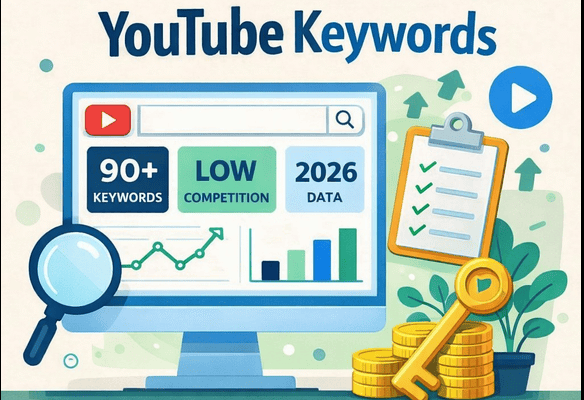

Low competition YouTube keywords are search terms that have a decent number of monthly searches but very few well-made videos competing for them. They give beginners and small channels a real chance to rank high in YouTube search results without needing millions of subscribers or a huge budget. In 2026, when YouTube has billions of videos, these keywords are one of the smartest ways to grow your channel quickly and steadily.
If you are just starting out, focusing on low competition YouTube keywords can help you get views, subscribers, and watch time faster than chasing popular but overcrowded terms.
What Are Low Competition YouTube Keywords and How They Work
Low competition YouTube keywords are phrases people actually type into YouTube search, but the top results are either old, poorly made, or not fully optimized. YouTube’s algorithm looks at search volume (how many people search the term) and competition (how strong the existing videos are). When volume is good but competition is low, your video has a better shot at showing up on page one.
Here is a simple example. The keyword “weight loss” has huge search volume, but thousands of big channels already dominate it. A low competition version might be “beginner home workout for belly fat after 40 no equipment.” Fewer videos target the exact long-tail phrase, so a well-made video can rank fast.
How it works in practice:
- You choose a keyword with real demand.
- You create a video that perfectly matches what searchers want.
- You optimize your title, description, tags, and thumbnail.
- YouTube’s algorithm notices the high watch time and relevance, then pushes your video higher in search results.
The result? More views from people who are actively looking for exactly what you offer.
Important Fundamentals Beginners Must Understand

Before you start hunting for keywords, learn these core ideas. They make the whole process easier and prevent wasted effort.
- Search Volume – The number of times people search a term each month. Aim for 100–5,000 searches for beginners. Too low means almost no views; too high usually means high competition.
- Competition (or Difficulty) – How hard it is to rank. Tools show this as a score (often 0–100). For new channels, target scores under 40–50.
- Long-Tail Keywords – Phrases with 4 or more words. They are more specific, easier to rank for, and attract viewers who know exactly what they want.
- Search Intent – The reason someone searches the term. Is it for information (“how to”), a tutorial, a product review, or entertainment? Your video must answer that exact need.
- Relevance – The keyword must match your niche and what your audience actually cares about. Irrelevant keywords lead to low watch time and hurt your channel.
Remember: YouTube rewards videos that keep people watching longer. A perfectly chosen low competition keyword plus great content beats fancy editing every time.
Step-by-Step Guide to Getting Started with Low Competition YouTube Keywords
Follow this exact process. It takes 15–30 minutes per video once you get used to it.
Step 1: Pick a broad topic in your niche. Example: If your channel is about cooking, start with “easy dinner recipes.”
Step 2: Generate keyword ideas. Type your topic into YouTube search and note the autocomplete suggestions. Write down 10–20 ideas.
Step 3: Check volume and competition. Paste each idea into a keyword tool (more on tools later). Look for:
- Monthly searches: 100+
- Competition score: low or medium
- Top videos: fewer than 10 strong, recent results
Step 4: Validate the opportunity. Search the keyword on YouTube. Ask these questions:
- Are the top 5 videos older than 2 years?
- Do they have low views or poor quality?
- Are titles, descriptions, or thumbnails weak? If yes, you have found a winner.
Step 5: Choose your primary keyword. Pick one main keyword per video. You can support it with 3–5 related secondary keywords.
Step 6: Optimize your video.
- Put the exact keyword in your title (naturally).
- Write the first 100 characters of the description with the keyword.
- Add it to tags and closed captions.
- Create a thumbnail that clearly shows the topic.
Step 7: Publish and promote. Share your video in relevant communities and track performance in YouTube Studio after 48 hours.
Repeat this for every new video. Consistency is key.
Easy YouTube Keywords, Rank Fast YouTube
Many beginners want results quickly. The secret is focusing on easy YouTube keywords that let you rank fast on YouTube.
These are usually long-tail phrases with clear intent and weak competition. They work especially well for new channels because YouTube loves fresh, relevant content that matches searcher needs.
Here is how to spot them fast:
- Look for keywords with 4–7 words.
- Target “how to,” “beginner,” “2026,” or “easy” in the phrase.
- Check if top videos have under 10,000 views or were uploaded years ago.
Real example: Instead of “guitar lessons,” use “easy guitar chords for beginners 3 chords only 2026.” A new creator who makes a clear, step-by-step video can rank in the top 10 within weeks because bigger channels ignore these specific searches.
The benefit? You get views sooner, build momentum, and the algorithm starts recommending your channel more often. Once you rank for several easy keywords, your overall channel authority grows, making future videos easier to promote.
Best Practices and Strategies
To get the most from low competition YouTube keywords:
- Create one strong video per keyword instead of spreading thin.
- Always match search intent 100%. If people want a tutorial, give them a tutorial.
- Use your keyword naturally in the first 15 seconds of the video (spoken and in captions).
- Build keyword clusters: one main keyword plus 4–6 related long-tails in the same video.
- Update old videos with new low competition keywords when trends change.
- Post consistently aim for 1–2 videos per week in the beginning.
- Study your YouTube Analytics search terms report every month to find new opportunities.
Pro tip: Focus on evergreen topics (timeless) mixed with timely ones (like “2026” updates) for steady growth.
Common Mistakes Beginners Make
Avoid these pitfalls:
- Chasing only high-volume keywords. They are too competitive for small channels.
- Ignoring search intent and making videos that do not answer the real question.
- Keyword stuffing repeating the phrase unnaturally in titles or descriptions.
- Skipping optimization after upload. Even the best keyword fails without good title, description, tags, and thumbnail.
- Giving up after one video. It takes 10–20 optimized videos to see clear patterns.
- Not checking if top results are actually weak. Always look at the actual search page.
Fix these and your success rate will jump.
Practical Examples and Real Use Cases
Example 1: Fitness niche Seed idea: “yoga” Low competition keyword: “10 minute morning yoga for beginners back pain relief”
- Search volume: moderate
- Competition: low
- Top videos: generic or outdated Result: A simple 10-minute video can rank and bring daily views from people searching for quick relief.
Example 2: Tech niche Seed idea: “smartphone” Low competition keyword: “best budget smartphone under 300 dollars 2026 camera test”
- Viewers want honest reviews, not ads.
- Make a clear comparison video with real footage. Result: New tech channels often rank fast with this approach.
Example 3: Personal finance Low competition keyword: “how to start investing with 100 dollars per month for beginners 2026”
- Specific, helpful, and low competition.
- Include screen recordings and simple explanations. Result: Builds trust and long-term subscribers.
Use these patterns in your own niche. The formula stays the same: specific + helpful + low competition = fast ranking.
Tips to Improve Results with Low Competition YouTube Keywords

- Track your top 10 videos monthly and reuse winning patterns.
- Add end screens and cards that link to related videos using the same keyword cluster.
- Encourage comments by asking questions in the video that match the search intent.
- Use YouTube Shorts to test new keywords quickly and drive traffic to longer videos.
- Analyze competitor comments on similar videos to find even better keyword ideas.
- Aim for 8–12 minute videos for most tutorials they perform best for watch time.
- Stay patient. The first 5–10 videos build your foundation; the next 20 bring real growth.
Top Tools and Resources for Low Competition YouTube Keywords Research
You do not need expensive software to start. Here are the five best tools in 2026 and exactly how beginners should use them.
1. YouTube Search Suggest (Autocomplete) This free built-in feature shows what people actually search. Type your seed keyword and note every suggestion. Use it first for quick ideas. Best for: daily brainstorming and long-tail discovery.
2. Google Trends (YouTube filter) Free tool that shows rising interest over time. Set the filter to YouTube searches. Use it to check if a keyword is gaining popularity or seasonal. Best for: validating trends and avoiding dying topics.
3. TubeBuddy Freemium browser extension with Keyword Explorer. It gives search volume, competition score, and related keywords. Free version is enough to start; paid unlocks more data. Use it to score your ideas in one click. Best for: quick competition checks and tag suggestions.
4. vidIQ Freemium tool with Keyword Inspector. It overlays search volume and competition scores directly on YouTube. Free tier works well for beginners. Use it to compare keywords side by side. Best for: competitor research and finding related questions.
5. SEMrush Keyword Analytics for YouTube Paid tool (starts around $10/month after trial) that shows competitive rate, search volume, and fast-growing terms. Use it once you have 5–10 videos and want deeper data. Best for: serious channels ready to scale.
Start with the two free tools, add TubeBuddy or vidIQ next, and upgrade only when your channel grows. All of them have free trials or tiers that are perfect for beginners.
Your Low Competition YouTube Keywords Checklist
Before publishing any video, run through this list:
- Keyword has 100+ monthly searches and low competition score.
- Top 5 search results are weak or old.
- Video title includes the exact keyword naturally.
- Description starts with the keyword and first 100–150 characters.
- Tags include primary keyword plus 5–8 related terms.
- Thumbnail clearly shows the topic and promise.
- Video answers the searcher’s exact question in the first 30 seconds.
Tick every box and you are set for success.
Final Thoughts
Low competition YouTube keywords are your shortcut to visible growth in 2026. By understanding the fundamentals, following the step-by-step process, avoiding common mistakes, and using the right tools, you can rank videos even as a complete beginner.
The most important thing is to start small, stay consistent, and always put your viewers first. Create helpful content around the keywords people are already searching for, and YouTube will reward you with more views and subscribers.
You now have everything you need in one complete guide. No more searching other websites just open YouTube, pick your first low competition keyword, and create your next video. Your channel growth starts today.
Frequently Asked Questions (FAQs)
1.What are low competition YouTube keywords?
Low competition YouTube keywords are search terms that have decent monthly searches but very few strong videos competing for them. This makes it easier for new and small channels to rank on the first page of YouTube search results.
2.How do I find low competition YouTube keywords for free?
Start with YouTube’s own search suggest (autocomplete). Type a broad topic and note the suggestions. Then use free tools like Google Trends and YouTube search to check if the top videos are old or low quality. TubeBuddy and vidIQ free versions also help.
3.What is the best length for low competition keywords?
The best low competition keywords are long-tail keywords with 4 to 7 words. They are more specific, have clearer search intent, and face less competition than short keywords.
4.Can beginners really rank fast with easy YouTube keywords?
Yes. Beginners can rank fast on YouTube by targeting easy YouTube keywords that match their niche, have low competition, and fulfill exact viewer needs. Consistent optimization and good content are the keys.
5.How many low competition keywords should I target per video?
Focus on one primary low competition keyword per video. You can support it with 4–6 related secondary keywords in the description, tags, and captions.
6.Are low competition YouTube keywords still effective in 2026?
Absolutely. In 2026, with millions of new videos uploaded daily, low competition keywords remain one of the smartest and most effective strategies for new creators to grow their channels quickly.
7.What tools are best for finding low competition YouTube keywords?
The top tools are YouTube Search Suggest, Google Trends, TubeBuddy, vidIQ, and SEMrush. Beginners should start with the free options and upgrade as the channel grows.
8.How long does it take to see results from low competition keywords?
Many creators see initial results within 1–4 weeks. Consistent uploading of well-optimized videos usually brings steady growth after 8–15 videos.