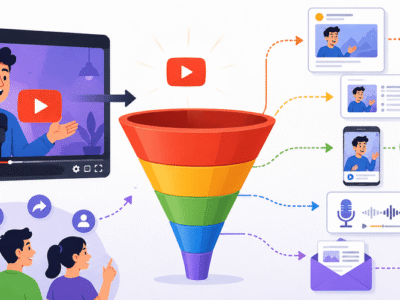

In 2026, YouTube remains one of the biggest search engines in the world. Millions of people type queries every day looking for tutorials, reviews, entertainment, how-tos, and more. But creating great content isn’t enough if no one finds it. That’s where free YouTube keyword research comes in.
Free YouTube keyword research is the process of discovering the exact words and phrases people type into YouTube’s search bar without paying for premium tools. It helps you choose video topics that have real demand (people actually searching) but manageable competition (easier to rank).
Why Free YouTube Keyword Research Matters for Beginners
- More views without ads: Target what people are already searching for.
- Beat bigger channels: Focus on specific, low-competition long-tail keywords.
- Save time and money: Create content that ranks instead of guessing.
- Sustainable growth: Build a channel around topics your audience actually wants.
Key concept: YouTube’s algorithm rewards videos that match searcher intent (what the user wants) and keep viewers watching longer.
Important Fundamentals Beginners Must Understand
Before jumping into methods, grasp these basics:
- Search Volume: How many times a keyword is searched per month. Higher = more potential views, but usually more competition.
- Competition (or Keyword Difficulty): How many strong videos already rank for it. Look for a balance — decent volume with weaker competition.
- Long-Tail Keywords: Longer, specific phrases (e.g., “how to edit videos on phone for beginners 2026” instead of just “video editing”). These are gold for beginners because they’re easier to rank for.
- Search Intent:
- Informational: “how to…”, “what is…”
- Navigational: Brand or specific video names
- Transactional: “best [product] 2026”, reviews
- Relevance & Trends: Keywords should match your niche and channel authority. Trends change, so check seasonality.
Pro Tip: Aim for keywords where you can create a better video than the current top results (better thumbnails, longer watch time, more value).
Step-by-Step Guide to Get Started with Free YouTube Keyword Research
- Choose your niche and brainstorm seed keywords Write down 5–10 broad topics you know well (e.g., “budget travel”, “beginner guitar”, “faceless YouTube ideas”).
- Use the 5 methods below to expand ideas.
- Evaluate each keyword for volume, competition, and fit.
- Create content optimized around 1 primary keyword + related terms.
- Track and iterate using YouTube Analytics.
The 5 Free Methods That Actually Work in 2026
Method 1: YouTube Search Bar Autocomplete (The Easiest Starting Point)
This is the most direct free method YouTube shows real suggestions based on popular searches.
Step-by-step:
- Go to YouTube.com and type a seed keyword (e.g., “beginner photography”).
- Note the autocomplete suggestions.
- Use modifiers: Add letters (a, b, c…) or question words (how, best, easy, 2026).
- Try variations: “beginner photography tips”, “beginner photography setup”, etc.
Example: Typing “easy vegan recipes” might suggest “easy vegan recipes for beginners”, “easy vegan recipes dinner”, etc.
Actionable Tip: Do this in an incognito window for unbiased results. Compile a list of 20–50 ideas.
Method 2: Google Trends (Spot Rising & Seasonal Opportunities)
Google Trends shows interest over time and compares keywords.
How to use:
- Visit trends.google.com.
- Select “YouTube Search” as the category.
- Enter keywords and compare (e.g., “air fryer recipes” vs “instant pot recipes”).
- Check regional data and related queries.
Real Example: “Summer outfits 2026” might spike in May–July. Plan videos accordingly.
Tip: Look for consistent or rising interest rather than one-time spikes.
Method 3: Competitor Analysis (Reverse-Engineer Success)
Study what’s already working.
Steps:
- Search your seed keyword on YouTube.
- Filter by “Upload date” (last year) or view count.
- Click on top videos and note their titles, descriptions, tags (use browser extensions if available).
- Ask: What are they doing well? Where can I improve? (Better hooks, more in-depth, different style).
Framework:
- Low-competition opportunity: Videos with <50K views from small channels on a relevant topic.
- High-potential: Keywords where top videos have low engagement (short watch time).
Method 4: Free Online Keyword Tools & Extensions
Several genuinely useful free options:
- Keyword Tool (keywordtool.io/youtube): Generates hundreds of autocomplete-based suggestions. Great for tags and long-tails. Free tier is generous.
- vidIQ Free Tools: Keyword generator with basic search volume and competition scores. Browser extension shows data while searching YouTube.
- TubeBuddy Free Version: Keyword explorer, SEO score on videos, tag suggestions.
- Ryrob YouTube Keyword Tool (ryrob.com): Free, no login, shows volume estimates.
- Keywords Everywhere (browser extension): Shows volume data on YouTube searches (limited free credits).
When to use each:
- Use Keyword Tool for brainstorming volume.
- vidIQ/TubeBuddy while browsing for live insights.
- Combine with autocomplete for best results.
Method 5: YouTube Studio Analytics & Inspiration Tools
Once you have some videos:
- Go to YouTube Studio → Analytics → Search terms (shows what people searched to find your videos).
- Trends tab: Audience-specific ideas.
- Inspiration tab: AI-powered suggestions based on your channel.
This method improves over time as your channel grows.
Best Practices and Strategies
- Primary + Secondary Keywords: Use one main keyword in title, first 100 characters of description, and tags. Sprinkle related terms naturally.
- Title Formula: [Keyword] + Benefit + Hook (e.g., “Easy Vegan Recipes for Beginners in 2026 – No Oil!”).
- Thumbnails & Hooks: Match searcher intent visually and in the first 15 seconds.
- Video Length: Match what ranks (check top videos).
- Consistency: Research for every video. Batch research 10 ideas at once.
- Long-Tail Strategy: Start with these to gain traction, then target broader terms.
Practical Checklist for Every Video:
- Primary keyword in title
- Keyword in first sentence of description
- 10–15 relevant tags (mix broad + specific)
- Chapters with timestamped keywords
- End screen/cards to related videos
- High-quality, valuable content (aim for 50%+ average view duration)
Common Mistakes Beginners Make
- Targeting only high-volume, ultra-competitive keywords (e.g., “iPhone review”).
- Ignoring search intent (creating a tutorial when people want a review).
- Stuffing keywords unnaturally.
- Not checking competition.
- Giving up after one video consistency wins.
- Focusing only on views, not watch time and audience retention.

Practical Examples and Real Use Cases
Niche: Beginner Fitness
- Seed: “home workout”
- Method 1: Suggestions like “home workout for beginners no equipment”
- Method 2: Trends show spikes in January.
- Competition: Many generic videos; opportunity for “no equipment home workout for women over 40”.
- Result: A targeted video can rank faster and build loyal subscribers.
Niche: Tech Tutorials
- Keyword: “best free video editor 2026”
- Use tools to confirm volume and find variations like “best free video editor for beginners Android”.
Tips to Improve Results with Free YouTube Keyword Research
- Combine methods: Never rely on just one.
- Track your own data: Note which keywords bring views in Analytics.
- Update old videos: Refresh titles/descriptions with new keywords.
- Stay current: Re-research trending topics every few months.
- Audience research: Read comments on similar videos for pain points.
- Test and iterate: Publish, analyze, adjust.
Top Free Tools Summary (2026)
- YouTube Search Bar — Instant, always accurate autocomplete.
- Google Trends — Trends and comparisons.
- Keyword Tool.io (YouTube) — Massive suggestion lists.
- vidIQ Free — Volume + competition overlays.
- TubeBuddy Free — SEO scoring and suggestions.
Start with these they’re more than enough for beginners.
Key Takeaways
- Free YouTube keyword research levels the playing field.
- Focus on value + relevance over chasing big numbers.
- Consistency + analysis = growth.
- Start small: Pick one niche, research 5 keywords this week, and create your first optimized video.
You now have a complete playbook. Apply these methods, create helpful content, and watch your channel grow. The best time to start was yesterday the second best time is right now.
Bookmark this guide, come back as you grow, and experiment. Your next viral (or steadily growing) video is one good keyword away!
FAQs
Q1: What is free YouTube keyword research?
Free YouTube keyword research is finding the exact phrases people search on YouTube without paying for tools, so you can create videos that actually get found.
Q2: Are free tools enough for YouTube keyword research?
Yes! For beginners and even intermediate creators, the combination of YouTube autocomplete, Google Trends, vidIQ, TubeBuddy, and Keyword Tool is more than enough.
Q3: What are long-tail keywords on YouTube?
Long-tail keywords are longer, specific phrases (e.g., “best free video editor for beginners 2026”) that have lower competition and higher conversion rates.
Q4: How often should I do keyword research?
Do keyword research for every new video. Spend 15–30 minutes per video and batch research 5–10 ideas at once every month.
Q5: Can beginners rank on YouTube in 2026?
Absolutely. Focus on low-competition long-tail keywords, create high-quality content, and optimize titles, descriptions, and thumbnails consistently.
Q6: Which is the best free tool for YouTube keywords?
YouTube’s own search bar autocomplete is the best starting point, followed by vidIQ (free version) and Keyword Tool.io.