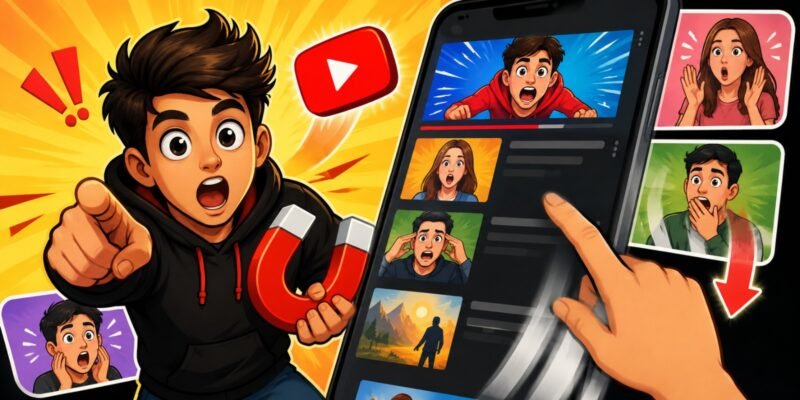

In 2026, YouTube viewers scroll faster than ever. You have roughly 1–3 seconds to grab attention before they swipe away. That’s where YouTube hooks that stop the scroll come in. A strong hook is the opening moment spoken words, visual, or text that makes someone stop, lean in, and keep watching.
What Are YouTube Hooks That Stop the Scroll and How Do They Work?
YouTube hooks that stop the scroll are the first few seconds of your video designed to interrupt mindless scrolling. They combine:
- Verbal hook (what you say)
- Visual hook (what viewers see)
- Emotional trigger (curiosity, surprise, relatability, or promise of value)
How they work: YouTube’s algorithm rewards high retention. If many people watch past the first 3–15 seconds, your video gets pushed to more viewers. A great hook boosts audience retention graphs (visible in YouTube Studio) right away.
Key statistic for 2026: Videos with strong hooks in the first 2–3 seconds see significantly higher swipe-through and completion rates, especially on Shorts.
Important Fundamentals Beginners Must Understand
- Timing is everything — Deliver your hook in the first 1–3 seconds. No long intros, logos, or “Hey guys, welcome back.”
- Relevance beats cleverness — The hook must match your title, thumbnail, and video content. Mismatches cause quick drop-offs.
- Visual + Verbal synergy — Pair bold text overlays, facial expressions, or fast cuts with your spoken words.
- Platform matters — Shorts need ultra-fast hooks (1–2 seconds). Long-form videos allow a bit more setup in the first 15–30 seconds but still need a strong opener.
- Test relentlessly — What works for one niche or audience may flop for another. Use YouTube Analytics to iterate.
Step-by-Step Guide to Creating YouTube Hooks That Stop the Scroll
Step 1: Know Your Audience Identify their pain points, desires, and questions. Example: Fitness beginners want quick results without gym intimidation.
Step 2: Choose a Hook Type Pick from curiosity, surprise, question, bold claim, story, or promise (more below).
Step 3: Write and Refine the Hook Keep it short (5–15 words). Make it specific and benefit-driven.
Step 4: Pair with Visuals Film yourself with high energy, use text overlays, or show the result upfront.
Step 5: Test in Context Watch the first 5 seconds with fresh eyes. Does it make you want to continue?
Step 6: Analyze and Improve Check retention graphs. If it drops sharply at the start, tweak the hook.
30 Proven YouTube Hooks That Stop the Scroll (With Examples)
Here are 30 ready-to-use openers, grouped by type. Adapt them to your niche.
Curiosity & Question Hooks (Great for engagement)
- “Have you heard about the world’s loneliest toilet?” (Real example with millions of views)
- “What if I told you YouTube is hiding your videos?”
- “Did you know 70% of your audience prefers video over text?”
- “Ever wonder why your views keep dropping no matter what you post?”
- “This one password trick Apple doesn’t want you to know…”
- “I never buy silk and here’s the strange reason why.”
Bold Claim & Surprise Hooks
- “Everything you know about [topic] is wrong.”
- “This mistake is destroying 90% of new YouTubers.”
- “Apple doesn’t want people to know this iPhone hack.”
- “The tech inside the Sphere is 20x bigger than IMAX.”
- “I went bald in 3 seconds here’s how.”
- “This is the only thing you need for [result].”
Problem-Solution & Promise Hooks
- “The biggest challenge for new creators is consistency here’s the fix.”
- “Struggling with low retention? Try this opening instead.”
- “In the next 60 seconds, you’ll learn how to [specific outcome].”
- “Stop making this number one mistake when creating videos.”
- “Here’s the one thing your doctor (or algorithm) probably missed.”
- “Turn your [problem] into [result] with this simple trick.”
Story & Relatable Hooks
- “I lost 10,000 subscribers before I learned this…”
- “The day I realized my content was boring changed everything.”
- “You’ve never seen headphones like these.”
- “POV: You finally discover the secret to [result].”
- “This changed how I [action] forever.”
Visual/Direct Address Hooks
- [Big facial expression + text] “Watch this before you scroll.”
- “If you’re still [common pain], you need to see this.”
- “3 things nobody tells you about [topic].”
- “Before you click away, hear this about [niche].”
- “This hair? It’s not mine. Boom gone.”
- “The hook that got me 8 million views starts like this…”
- “Stop scrolling if you want [desired outcome].”
Pro Tip: Combine types. Example: Visual surprise + bold claim + promise.
Best Practices and Strategies
- Front-load value — Tease your best point early.
- Use pattern interrupts — Sudden movements, silence, bold text, or questions.
- Be specific — “Lose 5kg in 30 days” beats “Get fit.”
- Match thumbnail & title — Consistency builds trust.
- High energy delivery — Smile, vary tone, use gestures.
- For Shorts: Hook in 1–2 seconds + clear value promise.
- A/B test — Create 2–3 versions and see what performs best.
Common Mistakes Beginners Make
- Starting with “Hey guys, welcome back…” (delays the hook).
- Overpromising and under-delivering (hurts retention and algorithm).
- Using vague or generic openers.
- Ignoring visuals great script with boring visuals still fails.
- Not testing or checking analytics.
- Inconsistent posting or poor niche focus.
Fix: Always lead with your strongest moment. Record multiple hook versions and pick the best.
Practical Examples and Real Use Cases
- Tech Review Channel: “Apple doesn’t want you to know this hidden iPhone setting” + quick demo visual → millions of views.
- Fitness: “The one workout mistake making you gain weight” + before/after split screen.
- Personal Finance: “I doubled my income with this boring habit” + story opener.
Apply the same patterns to your niche.
Tips to Improve Results with YouTube Hooks That Stop the Scroll
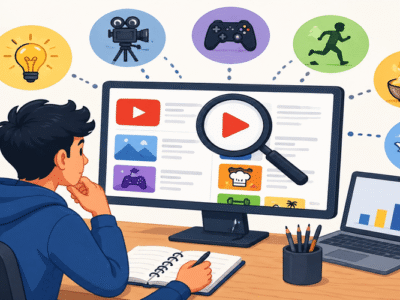
- Study top videos in your niche using YouTube search.
- Record 5 hook variations per video.
- Use text overlays for the first 3 seconds.
- End the hook by transitioning smoothly into the main content.
- Track “impressions to views” ratio in Analytics it shows hook strength.
- Update old videos with stronger hooks if possible.
Top Tools and Resources for 2026
Here are beginner-friendly tools to help craft better YouTube hooks that stop the scroll:
- vidIQ — Excellent for keyword research, hook ideas, and analyzing competitors. Use its AI script tools to generate hook suggestions tied to search data.
- Opus Clip or similar AI clippers — Automatically finds strong hook moments in long videos for Shorts.
- Storyflow or OverseerOS — AI platforms with templates for video planning and DNA-matched hooks. Great for full script workflows.
- Canva or Ideogram/FLUX AI — Create scroll-stopping thumbnails and text overlays quickly. Ideogram excels at text in images.
- YouTube Studio Analytics — Free and essential. Study retention graphs to refine hooks.
How to start with tools: Begin with vidIQ’s free tier for research, then use Canva for visuals. Experiment with one AI script tool for hook brainstorming.
Key Takeaways and Action Plan
YouTube hooks that stop the scroll are your most powerful growth tool in 2026. Master them and you’ll boost views, retention, and subscribers dramatically.
Quick Action Checklist:
- Write 3 hook variations for your next video.
- Film and test with strong visuals + text.
- Publish and check retention after 24 hours.
- Iterate based on data.
Start applying these 30 openers today. Your next video could be the one that finally breaks through.
Frequently Asked Questions
Q1: How long should a YouTube hook be?
A strong hook should deliver impact in the first 1–3 seconds. For Shorts, keep it ultra-fast; for long-form videos, expand slightly in the first 15 seconds but still start strong.
Q2: Do hooks work better for Shorts or long-form videos?
They are essential for both, but Shorts demand instant hooks (1–2 seconds) due to fast scrolling. Long-form gives a bit more time to build on the hook while still needing a powerful opener.
Q3: What makes a hook “scroll-stopping” in 2026?
Curiosity, surprise, specific promises, bold claims, or relatable problems paired with strong visuals (facial expressions, text overlays, or quick results). Specificity and relevance outperform generic intros.
Q4: How can beginners test their hooks?
Create 2–3 versions of your opening, publish, and check YouTube Studio’s audience retention graph. Look for sharp drops in the first few seconds and iterate.
Q5: Should I use AI tools for hooks?
Yes! Tools like vidIQ, Storyflow, or OverseerOS can generate ideas and full scripts tailored to your channel. Always personalize them for your voice and audience.
Q6: What’s the biggest beginner mistake with hooks?
Delaying the hook with welcomes, intros, or context. Viewers decide in seconds lead with your strongest, most valuable moment.
Q7: Can I reuse the same hook style?
Test and vary them. What works for one video may not for another. Rotate types (curiosity, surprise, promise) and track performance.